
Accidents et Incidents aériens



| Auteur | Message | |
|
maitrefollace
Inscrit le 03/06/2007 |
# 25 janvier 2009 11:14 | |
|
le vole aeroperu avait eu des statiques obstruées ((scotch) et pas détecté au décollage masi après un certain temps . le temps que les pressions se déséquilibrent Est ce une explication? |
||
 
|
||
|
etops
Inscrit le 28/04/2008 |
# 25 janvier 2009 15:28 | |
|
C'est vrai : exemple cité ci dessous ou les pitots / statiques non dégivrés ( par oubli de mettre sur on les réchauffages ) se sont comportés comme des altimètres , en gagnant de l' altitude , d'où la diminution de vitesse , malheureusement pas recoupée avec l' assiette et la poussée des moteurs . http://www.airdisaster.com/reports/ntsb/AAR75-13.pdf |
||
|
|
||
|
etops
Inscrit le 28/04/2008 |
# 26 janvier 2009 10:18 | |
|
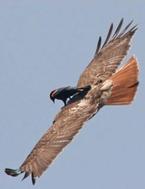
Péril Aviaire : risque sous estimé ? Extrait de Flight global Bird watching By Kieran Daly Assuming the US Airways Airbus A320 ditched in New York's Hudson river two weeks ago proves to have been brought down by Canada geese, the incident will still be only the most serious of numerous birdstrikes in the past year. But regardless of the astoundingly fortunate outcome, a renewed industry focus on tackling what has proved to be an enduring challenge for civil aviation seems certain. It is a tribute to sound regulatory action and manufacturers' engineering expertise that modern engines have proved to be so resilient when struck by birds. Despite that, the hazard generates huge costs even when aircraft survive, and there have been sufficient close calls to leave little doubt that a catastrophe is a reasonably likely turn of events. Just two months earlier a Ryanair Boeing 737-800, also CFM56-powered, barely made it to a landing that collapsed the landing gear when both engines lost virtually all power after ingesting a number of starlings from a flock that engulfed it at about 200ft (60m) above ground on short finals. A month earlier a Cyprus Airways Airbus A330 flew from Larnaca, Cyprus to London despite having ingested birds into both engines on departure. A recent report from the French government and civil aviation authority DGAC noted that 700 birdstrikes occur in the country each year, including 20% considered "significant" in terms of damage, cost or safety. It records a Boeing 767 incident in 2007 in which the ingestion of three herring gulls generated a €4 million ($5.17 million) repair bill. Major UK airport operator BAA has adopted a strategy of concentrating its bird-control effort on those species that are most prevalent and/or most likely to cause the worst damage. It is pleased with the results, which have seen such incidents at its seven locations fall steadily from 108 in 2004 to 71 in 2007, but still totalled 44 by the end of August last year. John Allan, head of the birdstrike avoidance team at the UK Department of Environment, Food and Rural Affairs Central Science Laboratory (CSL) and chairman of the International Birdstrike Committee (IBSC), says BAA's flagship Heathrow operation is a global industry leader with fewer than 1 strike per 10,000 aircraft movements. "There are European airports with rates of more than 10 per 10,000 movements," he says. UK CAA figures reveal a total civil birdstrike number for the nine months up to September 2008 as being more than 1,200, although the advent of mandatory reporting in the UK in 2004 drove the number of recorded incidents up dramatically - many of them minor. The US Federal Aviation Authority reported more than 33,000 civil birdstrikes between 1990 and 2000, and the figure now runs at 7-8,000 a year as reporting has been tightened up. Airbus's analysis of in-service reports suggests that two out of three birdstrikes result in a delay of upwards of 90min due to checks being carried out, plus repairs if required. The manufacturer says that incidents on take-off or climb-out result in a one-in-three likelihood that the flight will not continue to its planned destination. But it adds that approach incidents, probably due to low power settings, are more benign, and in one recorded case at a maritime airport an Airbus A320 flew through a flock of birds without ingesting any but leaving 250 dead birds on the tarmac. |
||
|
|
||
|
etops
Inscrit le 28/04/2008 |
# 26 janvier 2009 10:21 | |
|
En complément de l' article ci dessus : Je suggère de mettre un Transpondeur sur ces p.... d' oies Canadiennes http://www.aviation-civile.gouv.fr/html ... index.html |
||
|
|
||
|
LIGHTWEIGHT1
Inscrit le 21/03/2008 |
# 26 janvier 2009 10:31 | |
Oui, mais avec la traînée et le poids supplémentaires, il n' est pas sûr qu' elles comprennent qu' elles doivent s' engraisser davantage avant un décollage plus délicat...  |
||
|
|
||
|
etops
Inscrit le 28/04/2008 |
# 26 janvier 2009 22:30 | |
|
Suite de l' incident électrique B 757 : FAA safety alert sheds light on American 757 electrical emergency By John Croft ( flight global 26 Jan 21h00) A safety alert for operators (SAFO) recently published by the US FAA warns airlines to ensure that their flight manuals and training "reflect accurate abnormal indications and inoperative systems" when an aircraft's battery is depleted. The SAFO comes in response to a 22 September incident in which an American Airlines 757 en route from Seattle to New York's John F. Kennedy Airport diverted to Chicago O'Hare after several cockpit electrical systems began to fail, events that ultimately led to aircraft flight control problems, a runway excursion and subsequent deplaning of passengers on the runway. Pilots of Flight 268, with two crew, five flight attendants and 185 passengers, had earlier in the flight addressed a series of error messages in the cockpit by selecting, per the quick reference handbook (QRH), the aircraft's batteries to provide standby bus power. Though the QRH noted that "the battery will provide bus power for approximately 30 minutes," according to a separate US National Transportation Safety Board (NTSB) preliminary report of the same incident, the crew elected to continue the flight for several more hours to New York. FAA says by "correctly following the operator's procedure" in the QRH, the pilots isolated four power buses from the remaining electrical systems, powered those systems with the main battery and deactivated the main battery charger, making the battery the "sole power source" for the four isolated buses. According to the report, about 100min after isolating the power busses and disconnecting the battery charger, several electrical systems began to fail while flying over western Michigan, including the public address and cabin/cockpit interphone system. "A flight attendant wrote a note and slipped it under the cockpit door to inform the flight crew of their communications problems," says the NTSB. "A short time later, the cabin crew was informed that they were diverting to Chicago. One of the flight attendants then walked through the aisle informing the passengers of the unscheduled landing in Chicago." Once aligned with Runway 22R at O'Hare, the flight crew declared an emergency "as a precaution", says the NTSB. Closer to touchdown, the pilots discovered that the main and backup elevator trim systems were inoperative, requiring both pilots to use their control yokes to control the aircraft's pitch attitude. Given the reduced control, the crew also elected to use less than normal flap extension for the landing, trading off a lesser pitch change with a faster than normal landing speed. Pour mémoire , description technique de l' incident ( relevé par Beochien , si ma mémoire est bonne ) Friday, October 24, 2008 NTSB Preliminary Report on American Airlines Boeing 757 incident at O'Hare The U.S. National Transportation Safety Board (NTSB) has issued a preliminary report regarding the American Airlines Boeing 757 runway excursion incident at Chicago-O'Hare International Airport (ORD) last month. Readers will recall that on September 22, 2008, American Airlines Flight AAL 268 was en route from Seattle to New York when previously unspecified 'electrical problems' developed. The aircraft diverted to ORD where the crew performed a safe VFR landing. Unfortunately the aircraft departed the runway pavement before coming to a stop, causing 'minor damage' to the landing gear. There were no injuries reported among the seven crew members and 185 passengers on board. The NTSB's Preliminary Report [NTSB ID: CHI08IA292] about the incident, posted earlier today on the Board's website, makes for some very interesting reading. Rather than try to paraphrase or summarize the report, here is an excerpt from the report describing the sequence of events: While en route the flightcrew received an AIR/GRD SYS message, an illumination of the standby power bus OFF light, and several advisory and status messages on the engine indicating and crew alert system (EICAS). The flight crew then referenced the quick reference handbook (QRH) regarding the AIR/GND SYS message. The flight crew then followed the procedure referenced in the QRH for STANDBY BUS OFF by turning the standby power selector to the BAT position. The QRH procedure also referenced that, "The battery will provide bus power for approximately 30 minutes." The airplane systems stabilized with several items inoperative and the captain contacted maintenance technical support and subsequently elected to continue the flight on battery power. The flightcrew then reviewed the MAIN BATTERY CHARGER procedure referenced in the QRH. Approximately 1 hour and 40 minutes later, while in cruise flight, the battery power was depleted at which time several cockpit electrical systems began to fail. The airplane was over western Michigan and the captain elected to turn around and divert to ORD. Also, the flight attendants discovered that public address (PA) and the cabin/cockpit interphone systems were inoperative. A flight attendant wrote a note and slipped it under the cockpit door to inform the flight crew of their communication problems. A short time later, the cabin crew was informed that they were diverting to ORD. One of the flight attendants then walked through the aisle informing the passengers of the unscheduled landing at Chicago. While aligned with the runway to land, the flightcrew declared an emergency with the control tower as a precaution. As the airplane neared the runway on final approach, the flightcrew discovered that the elevator and standby elevator trim systems were inoperative. The captain then assisted the first officer on the flight controls and the approach to land was continued. The systems required to slow the airplane on the runway appeared to indicate normal, and with the elevator control issues the flightcrew did not want to perform a go-around to land on a longer runway. Pitch control of the airplane was difficult so the flightcrew elected to stop the flap extension at 20 degrees. The touchdown was smooth despite the control issues, however, the thrust reversers and spoilers did not deploy. The captain attempted to manually deploy the thrust reversers, but still was not sure if they deployed. The captain was concerned about the brake functionality and accumulator pressure so he made one smooth application of the brakes, which did not perform well. Due to obstructions off the end of the runway, the captain elected to veer the airplane off the left side of the runway into the grass. As the airplane touched down approximately 2,500 feet down the runway witnesses heard loud pops. Skid marks from the left main gear were evident near the point of touchdown and 165 feet further down the runway skid marks from the right main gear were present. These skid marks were visible for the entire length of the runway up until the airplane departed the pavement. The airplane came to rest with all three main landing gear off the left side of the pavement and the nose of the airplane came to rest approximately 100 feet prior to the end of the blast pad pavement which extended 397 feet past the departure end of the runway. After coming to a stop, the flightcrew was not able to shut the engines down with either the fuel cutoff valves or by extending the fire handles. The engines were subsequently shutdown by depressing the fire handles. The passengers were then deplaned through the L1 and R4 doors using portable stairs. Post incident investigation revealed a failure of the B1/B2 contacts in the K106 electrical relay. With the standby power selector in the AUTO position, this failure would have resulted in a loss of power to the battery bus and the DC standby bus, which would have resulted in the AIR/GND SYS message and illumination of the standby power bus OFF light which the flight crew received. With the standby power selector in the BAT position, as selected by the flight crew, the main battery provided power to the hot battery bus, the battery bus, the AC standby bus, and the DC standby bus. In addition, the main battery charger was not receiving power, and thus the battery was not being recharged. When main battery power was depleted, all 4 of the aforementioned buses became unpowered. (Message édité par ETOPS le 26/01/2009 22h30) |
||
|
|
||
|
eolien
Inscrit le 30/01/2008 |
# 27 janvier 2009 11:41 | |
|
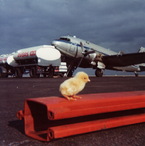
Bonjour de loin... Goose MTOW : 12 kg...  Bonne journee, Eolien777 |
||
|
|
||
|
etops
Inscrit le 28/04/2008 |
# 28 janvier 2009 09:20 | |
|
Pertes de contrôle en vol ( LOC ) - Les pertes de contrôle en vol restent une des premières causes d' accident . Entre 98 et 2007 , 22 pertes de contrôle en vol - Une étude intéressante de la CAA sur les causes de ces LOC. http://www.caa.co.uk/default.aspx?catid ... ageid=6281 - en tout état de cause , la culture LOC, l' entraînement des pilotes progresse . Dans certaines pratiques enseignées, l' entraînement était " négatif " , causant plus de dégats qu'autre chose ( A 300 -600 d ' AA = rupture de la dérive ) Fedex ( déja pionnier du HUD pour ses approches de précision ) décide d'installer des HUD avec g mètre sur sa flotte d' içi 2010 /2015 . Cette aide visuelle n' apparaissant que dans les cas de LOC permettra d' avoir conscience de l' accélération , d'aider à la reconnaissance LOC , et aider à la récupération . Cet équipement fait suite à une étude interne Fedex assez exhaustive sur simulateurs, en vol avec Learjet, Bonanza http://www.flightglobal.com/articles/20 ... f-loc.html (Message édité par ETOPS le 28/01/2009 09h21) |
||
|
|
||
|
etops
Inscrit le 28/04/2008 |
# 28 janvier 2009 13:44 | |
|
J'aime beaucoup le parallèle fait çi dessous ... J'ai hésité à le mettre sur le sujet : " que nous réserve ..." pour info le frère du rédacteur est pilote de ligne .. ( financialco.uk ) Hes paid to know what decisions have to be made, to make them and to execute them superbly. And he needs a well-trained team in the cockpit and the cabin to make it happen. Something in all of this made me think of the banking crisis. If you needed a pilots licence to lend money, most bankers wouldnt make it to Plane Spotter, first class. If bankers had a pilots training in risk and what to do when it makes all your dials go red, then the heat would have been taken out of the financial system long before banks started falling out of the sky. Bankers fly into thunderstorms because thats where the fun and excitement is, and it just adds to delay and cost to fly around them; besides, its not their plane, and they have a parachute. A golden one. Pilots avoid thunderstorms like cats avoid water. Its also striking how ill-suited our elected representatives are at times like this. Its as if a Boeing declared an emergency and called upon the transport minister to deal with it. Now our bankers have crashed, the minister couldnt help them, theyve left the wreckage and the casualties all over the entire economy and theyve given themselves such a dreadful fright they dont want to fly any more. They dont want to pilot the plane and they certainly dont want to fly as a passenger in anyone elses plane. They know how ill-equipped all the other bank-pilots are. Some day the planes will be flying again. When they do, theres an old saying in the aviation industry thats worth bearing in mind: There are old pilots and there are bold pilots, but there are no old, bold pilots. When we can start saying the same thing about bankers, well be getting somewhere. (Message édité par ETOPS le 28/01/2009 13h45) |
||
|
|
||
|
lequebecois
Inscrit le 11/02/2007 |
# 31 janvier 2009 10:09 | |
|
Pour ceux qui veulent se pratiquer à faire des amerrissage sur le fleuve Hudson, il y a maintenant le jeu en ligne Hero on the Hudson : http://www.addictinggames.com/heroonthehudson.html _________________ Le bonheur est une pause entre deux emmerdes ! Adepte de la discutaille du coin du comptoir du café de la gare |
||
|
|
||
|
eolien
Inscrit le 30/01/2008 |
# 31 janvier 2009 12:36 | |
|
Trop facile... congratulations et pax qui apparaissent sur les ailes !... Manque juste la télé pour mon interview ! |
||
|
|
||
|
didier
Inscrit le 07/03/2008 |
# 2 février 2009 12:11 | |
| Il semble selon le figaro qu'un avion vienne de déraper à Londres heureusement sans blesser personne. | ||
|
|
||
|
check-list
Inscrit le 24/11/2008 |
# 3 février 2009 14:56 | |
|
Félicitations eolien777 ! J'ai réussi une fois sur les 10 fois ! A vrai dire la maniabilité du jeu est complétement naze ... |
||
|
|
||
|
eolien
Inscrit le 30/01/2008 |
# 3 février 2009 19:38 | |
|
Merci Check-list... ... hélas, force est d'avouer que je l'ai crashé 3 ou 4 fois avant de réussir !... |
||
|
|
||
|
eolien
Inscrit le 30/01/2008 |
# 6 février 2009 17:33 | |
|
Retour sur l'Hudson River par une vidéo intéressante... 10 MINS OF COCKPIT RECORDINGS: HUDSON RIVER CRASH!! Bonne lecture, Eolien777 |
||
|
|
||

Ajouter une réponse
Vous devez être inscrit et connecté sur AeroWeb pour pouvoir ajouter une réponse à ce sujet !


