
Accidents et Incidents aériens (2)



| Auteur | Message | |
|
Beochien
Inscrit le 13/02/2007 |
# 29 juillet 2011 04:58 | |
|
Bonjour ! Une page légèrement différente et un peu contradictoire, au dossier des batteries Lithium ! Pas plus rassurant pour autant ! L'évidence est que ces matériaux ne devraient pas être transportés en avion ! Quote : Rcair1, post 97 sur A.net ! http://www.airliners.net/aviation-forum ... n/5214793/ Quoting LTBEWR (Reply 60): Today's ultra thin and small personal electronics may mean that we are reaching limits with today's technology as to margins of error in materials or tolerance of these batteries that under certain conditions they may have internal shorts in turn damaging other batteries so they too short out and expand the fires Not just small electronics - hybrid cars and e-cars are using or looking at Li batteries. The amount of energy here is tremendous. Quoting vlada (Reply 63): Is there some common knowledge under what conditions Li-Ion batteries are becoming dangerous, other than the excessive heat? One of the factors in making them small and efficient is thin insulating layers. These layers can be susceptible to very minor defects or material drift which causes a short which causes heat which causes a thermal runaway (chemical reaction) which can then heat and ignite surrounding material, i.e., other batteries. A pallet of Lithium batteries is a giant pile of energy - and if one fails and goes into thermal runaway - you are done. Quoting BoxBoy (Reply 83): Lithium acts as a metal (class D) fire so halon actually intensifies the fire. There are other chemicals available for class D fires, This is not precisely correct. For fires in PED batteries, halon or water is effective and recommended because the amount of Li is very small. For very large Lithium fires - copious amounts of water from a distance is recommended. The problem is that fighting the fire is a two stage process. Reference http://www.faa.gov/other_visit/aviat... ... 013SUP.pdf 1) you have to extinguish the fire (which Halon in a compartment would do) 2) you have to cool the batter faster than the thermal runaway heats it. This requires masses of water - enough both cool and overcome added energy by reaction with the Li. You cannot do this on an aircraft in flight. Fighting a Li battery fire in an aircraft is a non-starter. Won't work. Once a battery gets into thermal runaway - you must cool it or it will re-ignite. The only effective coolant is water. You don't (can't) have that water on board the aircraft. This problem will continue. Regardless of the technology - as we build smaller and smaller, higher and higher capacity batteries, you are packing immense amounts of energy in small packages. Failures that cause that energy to be released quickly WILL cause heat and fire. Because there is such an energy source, the heat will continue till the energy is expended. Due to the mass drive (hysteria?) for to e-power everything - this will get worse. To transport these in quantity "safely", you exclude aircraft. You get to the point where we require these batteries must be transported by ship, with special systems. Of course, that is economically non-viable, so it will not happen. _________________ JPRS |
||
 
|
||
|
Beochien
Inscrit le 13/02/2007 |
# 29 juillet 2011 04:59 | |
|
Bonjour ! Une page légèrement différente et un peu contradictoire, au dossier des batteries Lithium ! Pas plus rassurant pour autant ! L'évidence est que ces matériaux ne devraient pas être transportés en avion ! Quote : Rcair1, post 97 sur A.net ! http://www.airliners.net/aviation-forum ... n/5214793/ Quoting LTBEWR (Reply 60): Today's ultra thin and small personal electronics may mean that we are reaching limits with today's technology as to margins of error in materials or tolerance of these batteries that under certain conditions they may have internal shorts in turn damaging other batteries so they too short out and expand the fires Not just small electronics - hybrid cars and e-cars are using or looking at Li batteries. The amount of energy here is tremendous. Quoting vlada (Reply 63): Is there some common knowledge under what conditions Li-Ion batteries are becoming dangerous, other than the excessive heat? One of the factors in making them small and efficient is thin insulating layers. These layers can be susceptible to very minor defects or material drift which causes a short which causes heat which causes a thermal runaway (chemical reaction) which can then heat and ignite surrounding material, i.e., other batteries. A pallet of Lithium batteries is a giant pile of energy - and if one fails and goes into thermal runaway - you are done. Quoting BoxBoy (Reply 83): Lithium acts as a metal (class D) fire so halon actually intensifies the fire. There are other chemicals available for class D fires, This is not precisely correct. For fires in PED batteries, halon or water is effective and recommended because the amount of Li is very small. For very large Lithium fires - copious amounts of water from a distance is recommended. The problem is that fighting the fire is a two stage process. Reference http://www.faa.gov/other_visit/aviat... ... 013SUP.pdf 1) you have to extinguish the fire (which Halon in a compartment would do) 2) you have to cool the batter faster than the thermal runaway heats it. This requires masses of water - enough both cool and overcome added energy by reaction with the Li. You cannot do this on an aircraft in flight. Fighting a Li battery fire in an aircraft is a non-starter. Won't work. Once a battery gets into thermal runaway - you must cool it or it will re-ignite. The only effective coolant is water. You don't (can't) have that water on board the aircraft. This problem will continue. Regardless of the technology - as we build smaller and smaller, higher and higher capacity batteries, you are packing immense amounts of energy in small packages. Failures that cause that energy to be released quickly WILL cause heat and fire. Because there is such an energy source, the heat will continue till the energy is expended. Due to the mass drive (hysteria?) for to e-power everything - this will get worse. To transport these in quantity "safely", you exclude aircraft. You get to the point where we require these batteries must be transported by ship, with special systems. Of course, that is economically non-viable, so it will not happen. _________________ JPRS |
||
|
|
||
|
Vector
Inscrit le 26/06/2007 |
# 29 juillet 2011 16:39 | |
|
Bonjour JP, Le même problème se pose depuis longtemps avec les batteries Cadmium-Nickel. Le "thermal runaway" dont parlent tes posts est un phénomène bien connu et le feu ne peut être éteint que par de grandes quantités d'eau ou de sable. Peu commode dans un avion. Ce genre de marchandises ne devraient pas être transportées par avion, comme les explosifs et les matières radioactives. Surtout en compagnie de solvants et de résines, comme dans ce cas. Malheureusement, avec le Just-in-Time Manufacturing, on préfère avoir des bombes volantes que des entrepôts à surveiller... _________________ " Des trolls, n'en jetez plus, la cour est déjà pleine !" Vector |
||
|
|
||
|
Beochien
Inscrit le 13/02/2007 |
# 31 juillet 2011 10:35 | |
|
Il y a même des jours avec plus de chance (Relative) que d'autres! Un 737 Carribean, KC en 2 à l'atterro, aprés être sorti en bout de piste, en Guyane ! Pas de décés, juste qq blessés ! http://jamaica-gleaner.com/gleaner/2011 ... lead2.html Less than 48 hours after Caribbean Airlines celebrated the newest Boeing 737-800 to its fleet, their happiness turned to tragedy with the crash of one of their carriers at the Cheddi Jagan International Airport (CJIA) in Guyana. "It's an absolute miracle what happened here in Georgetown," CAL's chairman George Nicholas told the media yesterday. _________________ JPRS |
||
|
|
||
|
Beochien
Inscrit le 13/02/2007 |
# 31 juillet 2011 16:53 | |
|
Bonjour ! Vu sur A.net ... Les 737 cassent toujours au même endroit .... Le Carribean Airlines ! http://www.bbc.co.uk/news/world-latin-america-14355973 http://www.ibtimes.com/articles/189747/ ... -crash.htm ----------------------- Et du Voodoo de A.net ! Yes..I know what rows I am not sitting in on 737s. http://www.jaunted.com/files/1425/turkishcrash.jpg http://farm3.static.flickr.com/2611/420 ... ff0aaa.jpg http://www.planetalkinglive.com/wp-c... ... -crash.jpg _________________ JPRS |
||
|
|
||
|
Albatros
Inscrit le 18/01/2008 |
# 1 août 2011 08:41 | |
| C'est comme tous les avions 320 etc,.... ridicule votre remarque mais ce n'est pas la première ni la dernière je suppose | ||
|
|
||
|
Albatros
Inscrit le 18/01/2008 |
# 1 août 2011 08:45 | |
| elle n'est pas de vous désolé.....mais quel que soit l'auteur c'est ridicule | ||
|
|
||
|
Beochien
Inscrit le 13/02/2007 |
# 1 août 2011 08:54 | |
|
A ce niveau, c'est ridicule d'être désolé ! Vaut mieux assumer sa continuité, aussi, chacun la sienne ! On est comme ça, c'est tout ! Au fait, quelle est la phrase incriminée ! Dés fois que qq'un essaye (encore) de vous comprendre ! (Dernière édition le 1 août 2011 09:00) _________________ JPRS |
||
|
|
||
|
lequebecois
Inscrit le 11/02/2007 |
# 11 août 2011 22:10 | |
|
Bonjour, Encore deux incidents moteur RB211 sur des B747 récemment : British Airways : http://avherald.com/h?article=44117f1e&opt=0 Cathay : http://avherald.com/h?article=4412223a&opt=0 Et un autre sur un CF6 (DC-10) d'Omni Air cette fois-ci : http://avherald.com/h?article=44118517&opt=0 _________________ Le bonheur est une pause entre deux emmerdes ! Adepte de la discutaille du coin du comptoir du café de la gare |
||
|
|
||
|
lequebecois
Inscrit le 11/02/2007 |
# 23 août 2011 17:48 | |
|
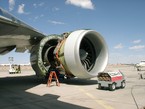
Bonjour, Possible uncontained engine failure pour un Trent 895 d'un 777-300 d'Emirates. A suivre... http://avherald.com/h?article=441c4622&opt=0 (Dernière édition le 23 août 2011 17:49) _________________ Le bonheur est une pause entre deux emmerdes ! Adepte de la discutaille du coin du comptoir du café de la gare |
||
|
|
||
|
pesawat
Inscrit le 06/01/2007 |
# 23 août 2011 23:34 | |
| Et le 350 qui reste avec RR uniquement...quelle erreur. | ||
|
|
||
|
orkanyde
Inscrit le 06/01/2011 |
# 24 août 2011 07:53 | |
|
Aucun rapport entre une sélection d'un unique motoriste & la fiabilité. Boeing 737 & CFM sont un parfait contre exemple. Quand a RR a actuellement maitrisé certains évènements sur ces Trent 800/900/1000, espéreront effectivement qu'il régleront ces problèmes sur la motorisation de l'A350. Enfin un autre moteur, type GE90 n'assurerai pas forcément plus de fiabilité coté moteur (rappelons les déboire du GE90-115 au départ qui a eu pas mal d'arrêt moteur en vol....). Par contre, on peut éventuellement en déduire que la technologie triple corps montrerait peut être certaines limites sur des moteurs à forte puissance.... |
||
|
|
||
|
Beochien
Inscrit le 13/02/2007 |
# 24 août 2011 11:21 | |
|
Bonjour ! Bien un T800 de RR qui à lâché ... Aprés les GE90-115 Séries , maintenant stabilisées ! Chacun son tour , et pas de quoi rire non plus, quand on pense aux ETOPS ... ! Le casing abîmé, mais pas de projections extérieures ... donc un cas de 1/2 containment si on peut dire ! Pas sûr que le 3 arbres (Et ses trains de roulements) soit en cause ! Je vois plutôt les conséquences de technos ... Qui flirtent avec les T° max ! Les allégements des casing qui arrivent à leurs limites ... Et les disk aussi ! La course aux perf's poussée un peu loin ! Et ils en sont tous là les motoristes ! Et quand ou regarde dans le retro, il y a 20 ou 30 ans, c'était pire ... mais sans les ETOP's Pour le TXWB du A350, espérons juste que RR profitera des expériences ... et que n'étant pas en concurrence ils éviteront certaines pressions ! Juste mon idée ! _________________ JPRS |
||
|
|
||
|
orkanyde
Inscrit le 06/01/2011 |
# 24 août 2011 13:21 | |
|
Surement plutôt une rupture de plusieurs aubes ou autre chose qu'un disque (un des joints tournants?), car celui ci aurait perforé le carter. Ou alors le carter est vraiment bien robuste sur Trent 800, ou le disque très léger.... Pour la concurrence, pas besoin d'en avoir pour vouloir éviter un explosion non contenue. Le risque pour le motoriste est tellement important (image de marque, procès et cie) que de toute façon les motoristes travaillent pour ne pas avoir cela. La concurrence permet surtout de jouer sur le tarif d'acquisition & des couts de maintenance. |
||
|
|
||
|
Beochien
Inscrit le 13/02/2007 |
# 24 août 2011 13:26 | |
|
Tout à fait d'accord pour ce cas ... une salade d'aubes , est la plus probable ... les Disk, on sait ce que celà donne, rien ne résiste ! _________________ JPRS |
||
|
|
||



Ajouter une réponse
Vous devez être inscrit et connecté sur AeroWeb pour pouvoir ajouter une réponse à ce sujet !


